

What Is Self-Compassion?
Have you ever noticed how much easier it is to offer kindness, patience, understanding and compassion to a family member, a friend, a colleague, a neighbour, and even a stranger than it is to offer these same things to yourself?
When someone we love is struggling, we listen to them patiently, we reassure them, we hug them, and we gently remind them that they’re doing the best they can right now. We don’t expect them to have all the answers. We don’t even think of telling them that they should have known better, that they should have more, that they should have tried harder or that they should have managed to be stronger.
And yet, when we are the ones struggling, when we are in such pain, how often do we speak to ourselves in an entirely different way?
🌿I should have done better.
🌿I should have known better.
🌿Why can’t I do anything right?
🌿Everyone else seems to manage. What the hell’s wrong with me?
That critical voice has been with us for so long that we barely notice it anymore. It’s literally taken over the way we talk to ourselves. But… what if there was another way?
“Being on your own side doesn’t mean agreeing with everything you do. It means not abandoning yourself while you learn.” – Fiona Elizabeth
Self-Compassion Isn’t About Getting Everything Right
For a long time, so many of us have believed that being hard on ourselves will somehow help us to become better people. We criticise ourselves because we want to improve. We push ourselves because we don’t want to fail. We tell ourselves to be stronger because we believe we shouldn’t be struggling in the first place.
But self-compassion invites us to consider something different…
💫 What if we didn’t have to turn against ourselves every time life becomes difficult?
💫 What if we could acknowledge our mistakes without making them a measure of our worth?
💫 What if we could recognise that we’re struggling, without adding another layer of criticism?
Self-compassion doesn’t mean making excuses, avoiding responsibility, or pretending that everything is just fine. It means…
🌸noticing our negative emotions without being overwhelmed by them, ignoring them or over-identifying with them.
🌸learning to meet ourselves with the same gentleness, understanding and forgiveness that we so often extend to others, instead of harsh judgment.
🌸recognising that we can be imperfect, uncertain, frightened or overwhelmed and still deserve kindness.
🌸acknowledging that everyone makes mistakes – yes, EVERYONE – and that you too deserve the empathy, the support, and the appreciation that you would give to them.
“I don’t have to feel better before I am worthy of my own kindness” – Fiona Elizabeth
Learning to Be on Your Own Side
I love the expression… “Being on your own side”. It’s not suggesting that we have to become someone different. It’s not asking us to eliminate every difficult, challenging thought or feeling that we have. And it certainly doesn’t mean that our lives will suddenly become simple, uncomplicated and painless. It simply invites us to start changing the relationship that we have with ourselves.
“Being on your own side” means noticing when you’re judging, blaming, feeling inadequate, and speaking harshly to yourself. It means…
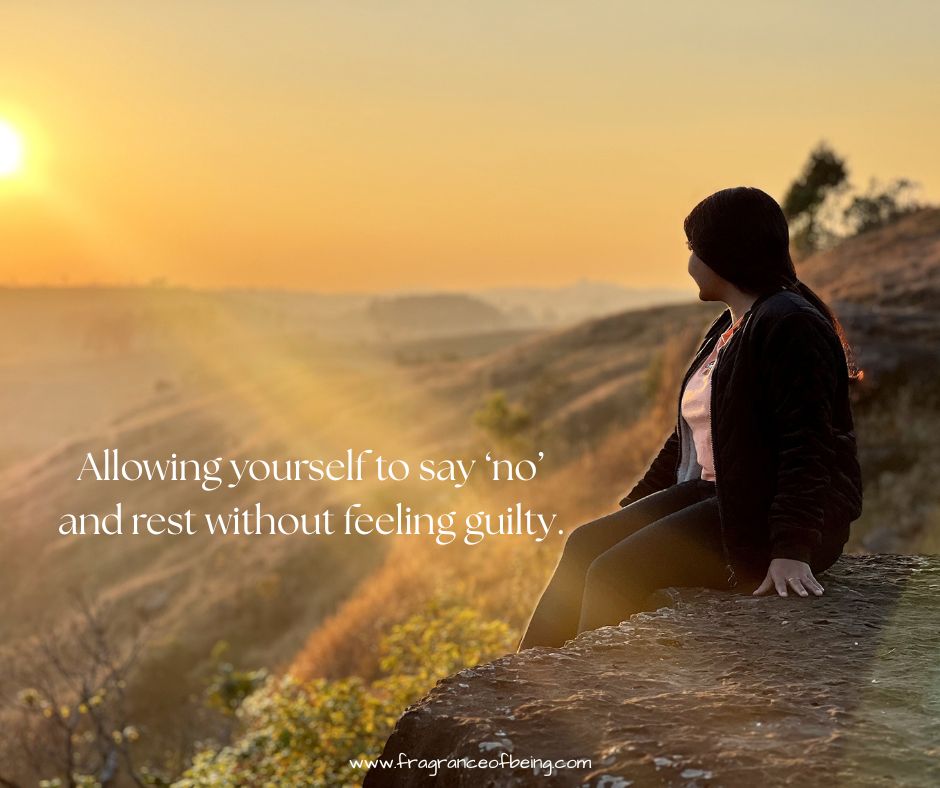
🌸allowing yourself to say ‘no’ and rest without feeling guilty.
🌸recognising that you don’t have to resolve everything today.
🌸replacing your self-judgement with compassion, kindness and warmth.
🌸acknowledging yourself…Right now I’m having a difficult moment, and I don’t need to make everything harder by criticising myself.
And sometimes, that tiny shift is enough to create yourself a little breathing room.
“Self-compassion is a way of emotionally recharging our batteries. Rather than becoming drained by helping others, self-compassion allows us to fill up our internal reserves, so that we have more to give to those who need us.” – Kristin Neff
A Little Moment of REmembrance
Just pause for a moment and think of a recent situation when you felt disappointed in yourself, or you made a mistake, or you believed you weren’t doing enough or being enough.
Simply notice the words that you used when you were speaking to yourself.
Now imagine that someone you love came to you with exactly the same experience as you. What would you say to them?
Would you criticise them?
Would you tell them they weren’t good enough?
Or…
Would you listen?
Would you offer understanding?
Would you remind them that one difficult moment does not define who we are?
And now, here’s another question…. Could you offer yourself even just a little of that same kindness?
You don’t have to force yourself to believe anything. You don’t have to replace every critical thought with a positive one. Just notice. Just be aware…and allow yourself to consider that you too are worthy of compassion.
Self-Compassion Is a Practice, Not a Destination
There will always be days when we forget. Days when that old critical voice loudly returns. Days when we feel overwhelmed, disappointed or uncertain. And that’s all right because self-compassion isn’t another standard we have to meet and it’s not something we can fail at.
Self-compassion is a relationship that we can return to, again…and again…and again. Because learning to be on our own side doesn’t mean that we’ll never struggle again. It means learning to stay with ourselves…while we struggle.
And that’s where a different relationship with ourselves begins. Not by becoming perfect, but by finally REmembering that we are worthy of our own kindness, patience and compassion, wherever we are.
“If your compassion does not include yourself, it is incomplete.” — Jack Kornfield

An Invitation to Put Self-Compassion into Practice
Perhaps, as you have been reading these words, something within you has whispered, I’d like to learn how to do this. If so…I’d love to invite you to join me for a small, welcoming online gathering…
A Self-Compassion Gathering — Learning to Be on Your Own Side
This won’t be a lecture or a traditional webinar. My aim is that it will be a warm, interactive gathering where you can begin experiencing what it means to actually be on your own side. Together, we’ll move beyond understanding self-compassion intellectually and begin to explore what it feels like to practise it in our relationship with ourselves.
We’ll create a space where we can meet ourselves with greater kindness. Exploring what self-compassion can mean in everyday life through presence, gentle reflection, guided practice, optional sharing and a simple candle ritual.
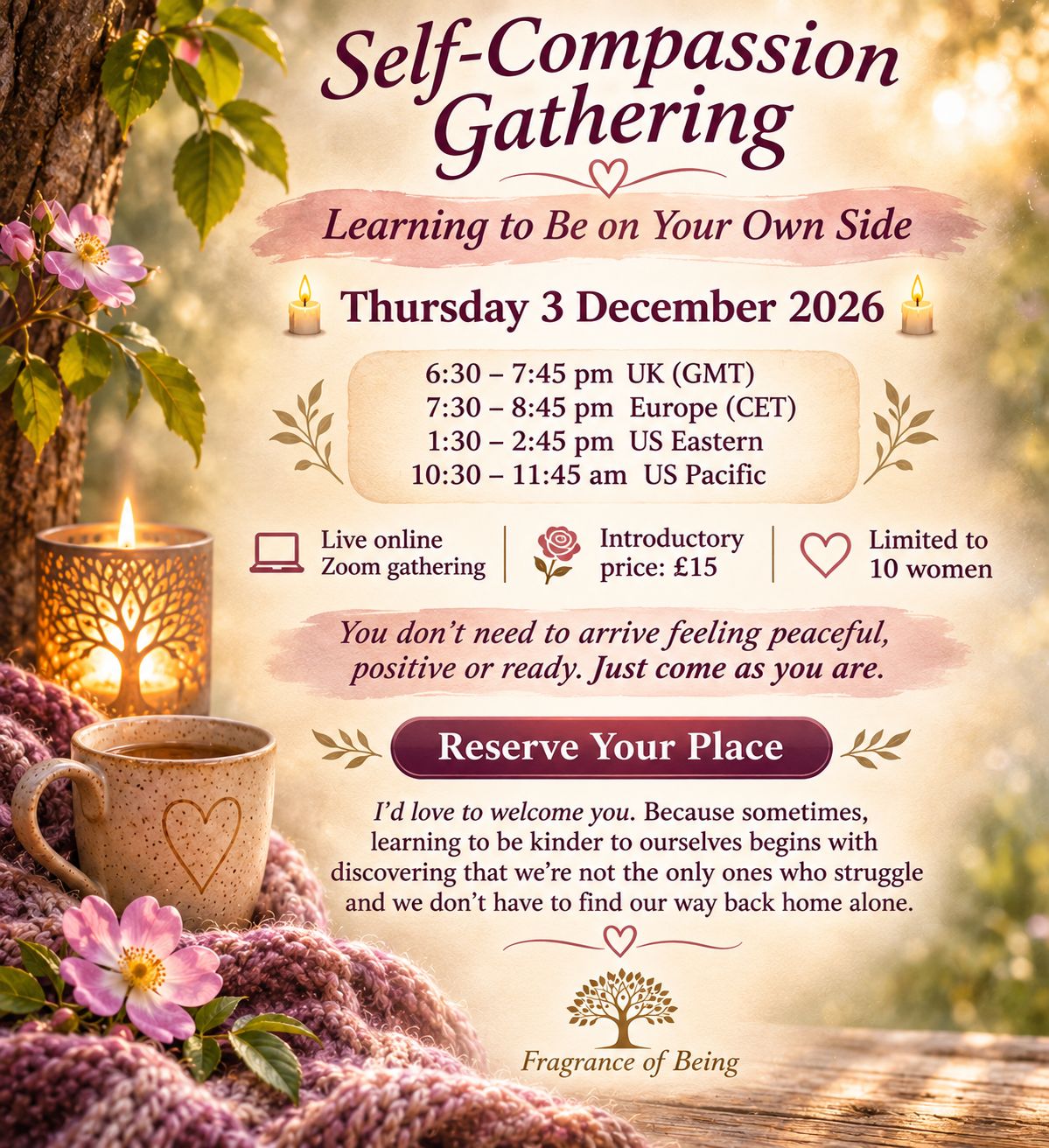
🌸You don’t need to arrive feeling peaceful, positive or ready.
🌸You don’t need to have the answers.
🌸You don’t need to tell your story.
🌸There’s no pressure to share anything that you’re not comfortable sharing.
This is an invitation to begin a gentler relationship with yourself. Not by becoming someone different but by learning to remain on your own side, just as you are.
I’d love to welcome you.
You might also be interested in reading these blogs…
Limited Self-Compassion: Being Our Harshest Critic
What if you stopped looking for what is wrong with you?
REmembering Yourself Not Fixing Yourself
BIG Love


Recent Comments